
Piles or Fissure? Understand the Difference, Symptoms and Treatment in Beed
Introduction
Piles or fissure? This is a common question when a person notices blood after passing stool, pain, burning, itching, or swelling around the anus. Because the symptoms can look similar, many people assume that every anal problem is piles. But piles and anal fissure are two different conditions.
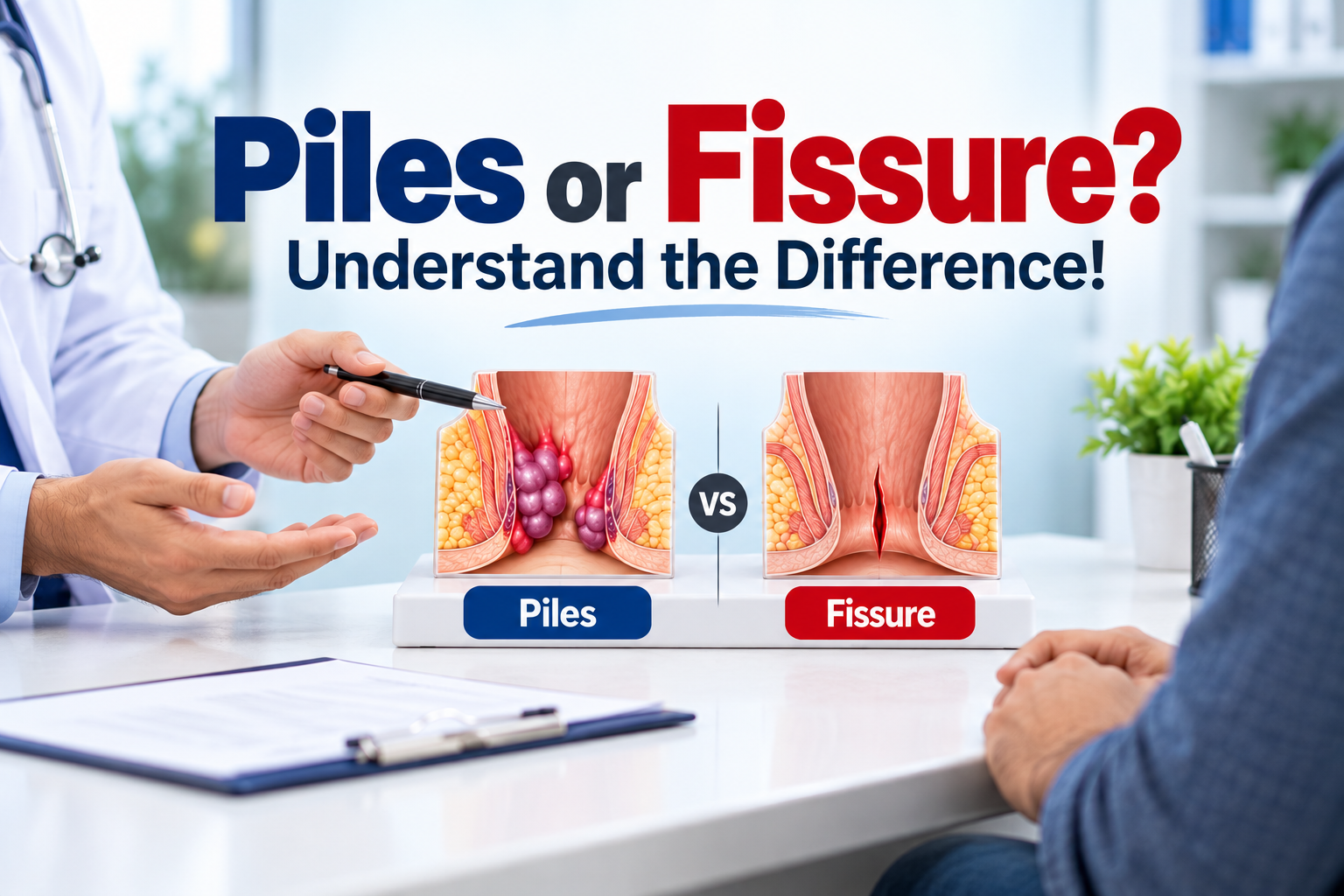
Piles are swollen blood vessels in and around the anus or lower rectum. An anal fissure is a small tear in the lining of the anus. The causes, symptoms, and treatment can therefore be different.
Constipation, hard stools, and straining during bowel movements can play a role in both conditions. A fissure often causes sharp pain during or after passing stool, while piles may cause bleeding, itching, swelling, or a lump. However, symptoms can overlap, so self-diagnosis is not always reliable.
If you are in Beed or nearby areas and have repeated rectal bleeding, anal pain, constipation, or swelling, getting a proper medical examination is important.
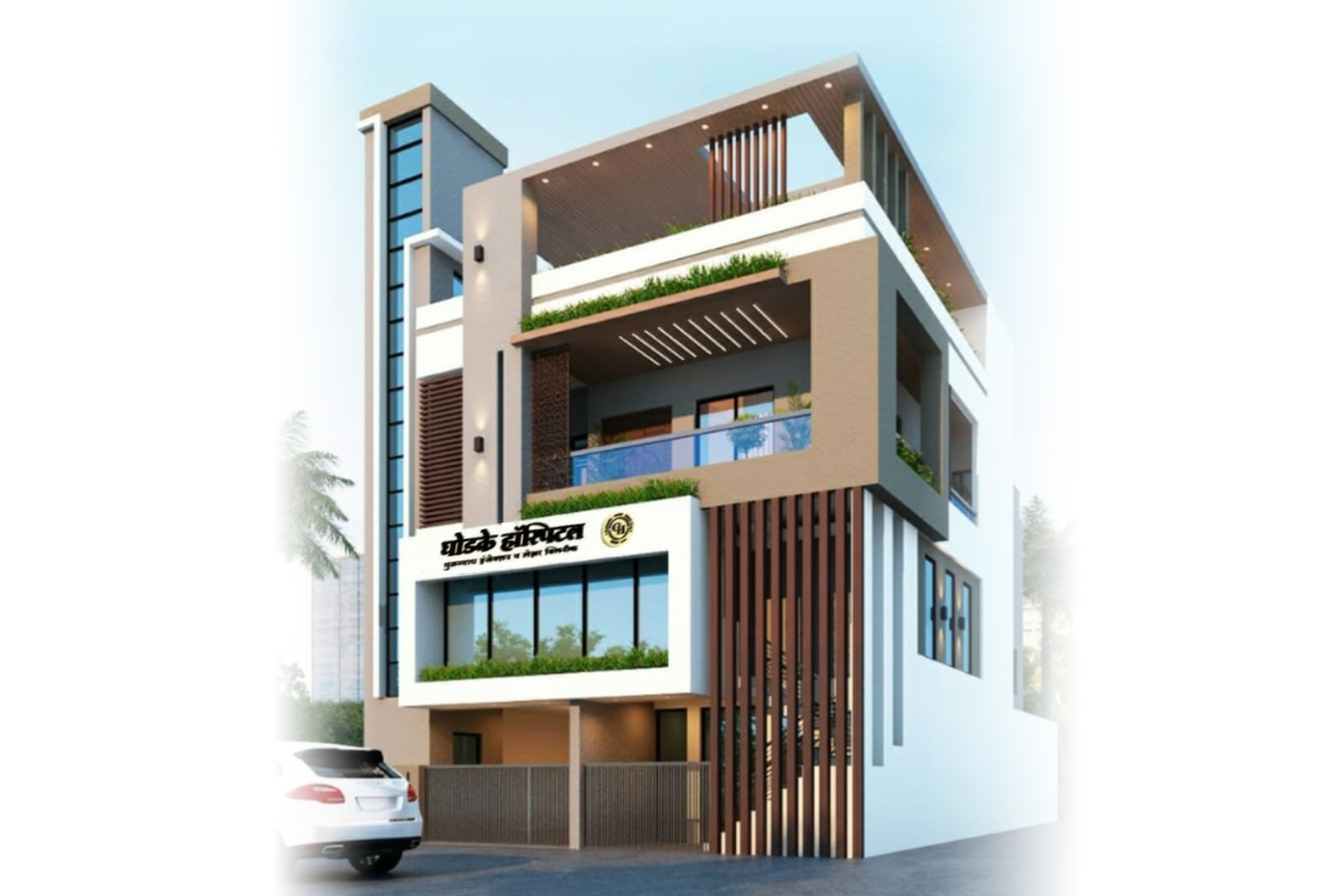
Ghodke Piles Hospital in Beed provides consultation and treatment for piles, fissure, fistula, and other anorectal conditions. Treatment is selected according to the patient’s symptoms and examination.
Table of Contents
- What Are Piles?
- What Is an Anal Fissure?
- Piles vs Fissure: Main Difference
- Symptoms of Piles
- Symptoms of Anal Fissure
- Causes and Risk Factors
- Can You Have Piles and Fissure Together?
- Diagnosis
- Treatment Options
- Laser Piles Treatment
- Stapler Surgery
- When Should You See a Doctor?
- Prevention Tips
- Frequently Asked Questions
- Conclusion
What Are Piles?
Piles, also called hemorrhoids, are swollen blood vessels in the anus or lower rectum.
They are common and can affect people of different ages. Some people have piles without any symptoms. Others may experience bleeding, itching, swelling, discomfort, or a lump around the anus.
Piles can be internal or external.
Internal Piles
Internal piles develop inside the rectum. They may cause bright red bleeding during or after bowel movements. In some cases, they can become enlarged and come outside the anus.
External Piles
External piles develop under the skin around the anus. They may cause swelling, tenderness, itching, or pain.
You can read more about the condition on the Piles Treatment page.
Quick Answer: What are piles?
Piles are swollen blood vessels in or around the anus and lower rectum. They can cause bleeding, itching, swelling, discomfort, or a lump.
What Is an Anal Fissure?
An anal fissure is a small tear or crack in the lining of the anus.
It commonly happens when a person passes a hard or dry stool. Constipation and repeated straining can increase the risk.
The most noticeable symptom is often sharp pain while passing stool. The pain may continue for some time after the bowel movement. Fresh blood may also appear on toilet paper or on the surface of the stool.
Some acute fissures can improve with proper bowel management and medical treatment. Long-standing fissures may need additional treatment.
You can learn more about the condition through the Anal Fissure Treatment page.
Quick Answer: What is an anal fissure?
An anal fissure is a small tear in the lining of the anus. It commonly causes sharp pain and fresh bleeding during or after bowel movements.
Piles vs Fissure: What Is the Difference?
The easiest way to understand the difference is:
Piles = swollen blood vessels
Fissure = a tear in the anal lining
| Feature | Piles | Anal Fissure |
|---|---|---|
| Main problem | Swollen blood vessels | Small tear in anal lining |
| Common symptom | Bleeding | Sharp pain |
| Pain | May or may not occur | Often prominent |
| Bleeding | Common | Usually a small amount of fresh blood |
| Itching | Can occur | Less common |
| Swelling/lump | Can occur | Usually not the main symptom |
| Common trigger | Straining, constipation, pressure | Hard stool and constipation |
| Treatment | Lifestyle, medicines, procedures or surgery depending on severity | Bowel management, medicines, procedures or surgery depending on the case |
This comparison is useful, but it should not replace a medical examination.
Rectal bleeding can have several causes, so repeated bleeding should not automatically be assumed to be piles.
Symptoms of Piles
Piles can cause different symptoms depending on their type and severity.
Common symptoms include:
- Bright red bleeding during or after stool
- Itching around the anus
- Irritation or burning
- Swelling
- A lump around the anus
- Discomfort while sitting
- Mucus discharge in some cases
- Piles coming outside during bowel movements
- Pain, especially with some external piles
One important point is that internal piles may bleed without causing much pain.
This is one reason why the symptom pattern can be different from an anal fissure.
Symptoms of Anal Fissure
Anal fissure often has a very different pain pattern.
Common symptoms include:
- Sharp pain while passing stool
- Burning after bowel movement
- Pain that continues after passing stool
- Fresh blood on toilet paper
- A feeling of tearing or cutting pain
- Fear of passing stool because of pain
- Constipation
- Irritation around the anal opening
A person with fissure may start avoiding bowel movements because of pain. This can make stool harder and may create a cycle of constipation and repeated injury.
What Causes Piles?
Piles are linked with increased pressure around the veins of the anus and rectum.
Common risk factors include:
- Chronic constipation
- Straining during bowel movements
- Sitting on the toilet for a long time
- Low-fiber diet
- Chronic diarrhea
- Pregnancy
- Being overweight
- Increasing age
- Heavy lifting
Regular bowel habits and avoiding unnecessary straining can help reduce the risk.
For reliable information about hemorrhoids, the National Institute of Diabetes and Digestive and Kidney Diseases provides useful patient information.
What Causes an Anal Fissure?
The most common cause is trauma to the anal lining, especially when passing hard stool.
Possible causes include:
- Constipation
- Hard or dry stools
- Repeated straining
- Frequent diarrhea
- Childbirth
- Anal injury
- Some medical conditions
A fissure may become chronic when it does not heal properly and keeps returning.
Can You Have Piles and Fissure Together?
Yes.
A person can have both piles and an anal fissure at the same time.
This can happen because constipation and straining may contribute to both problems.
For example, a patient may have bleeding from piles and sharp pain from a fissure. Treating only one problem without identifying the other may not provide complete relief.
This is why proper examination is important when symptoms continue.
How Are Piles and Fissure Diagnosed?
Diagnosis usually begins with a discussion about your symptoms and bowel habits.
The doctor may ask:
- How long have you had the symptoms?
- Is there bleeding?
- Is the blood bright red or dark?
- Is there pain during bowel movements?
- Does pain continue after stool?
- Do you have constipation?
- Is there a lump or swelling?
- Have you had similar symptoms before?
A physical examination may then be performed.
Depending on the symptoms, additional examination may be required to identify the exact cause.
Do not assume that every case of rectal bleeding is piles. Other conditions can also cause bleeding.
Treatment Options for Piles
Treatment depends on the type and severity of piles.
1. Lifestyle Changes
For mild symptoms, improving bowel habits can be helpful.
Important measures include:
- Eat more fiber-rich foods
- Drink adequate fluids
- Stay physically active
- Avoid unnecessary straining
- Do not sit on the toilet for a long time
- Treat constipation
- Do not ignore the urge to pass stool
These changes may help improve bowel movements and reduce pressure during defecation.
2. Medicines
Depending on the symptoms, a doctor may recommend medicines for:
- Pain
- Itching
- Swelling
- Constipation
- Stool softening
Do not take medicines repeatedly without medical advice, especially if you have persistent bleeding.
3. Procedures
Some internal piles can be treated using procedures such as rubber band ligation or other minimally invasive methods.
The correct option depends on the grade and type of piles.
Laser Piles Treatment in Beed
Laser-based treatment may be considered for selected patients with piles.
Laser treatment is not automatically suitable for every patient. The doctor needs to assess the piles and determine whether the procedure is appropriate.
Ghodke Piles Hospital provides information about Laser Treatment for Piles, Fissure and Fistula in Beed.
The goal of treatment is to manage the underlying condition safely and appropriately. The choice between laser treatment, another procedure, medicines, or surgery depends on the individual case.
Stapler Surgery for Piles
Stapled hemorrhoid surgery may be considered for selected patients with certain types of advanced internal piles.
It is not required for every patient with piles.
The doctor may consider factors such as:
- Grade of piles
- Degree of prolapse
- Bleeding
- Previous treatment
- Overall health
- Examination findings
Therefore, patients should not choose a procedure only because it is described as modern or minimally invasive.
Treatment for Anal Fissure
Treatment of fissure often focuses on helping the tear heal and preventing repeated injury.
Depending on the condition, treatment may include:
- Increasing dietary fiber
- Drinking adequate fluids
- Keeping stools soft
- Warm sitz baths
- Medicines prescribed by a doctor
- Topical treatment
- Further procedures for persistent or chronic cases
Many acute fissures can improve without surgery when properly managed.
However, a chronic fissure may require more advanced treatment.
You can visit the Anal Fissure Treatment page for more information.
Is Surgery Always Necessary?
No. Surgery is not required for every patient with piles or fissure.
Some people improve with diet changes, better bowel habits, medicines, or non-surgical procedures.
Surgery or another procedure may be considered when:
- Symptoms are severe
- The problem keeps returning
- Conservative treatment does not work
- Piles are advanced
- A fissure becomes chronic
- The doctor finds another condition requiring treatment
The correct treatment should be decided after examination.
When Should You See a Doctor?
Do not ignore the following symptoms:
- Repeated blood in stool
- Rectal bleeding
- Severe anal pain
- Pain every time you pass stool
- A painful lump
- Persistent swelling
- Pus or unusual discharge
- Repeated constipation
- Symptoms that keep returning
- Symptoms that do not improve with basic care
If you are in Beed or nearby areas, consult a qualified doctor if these symptoms continue.
Early assessment can help identify whether the problem is piles, fissure, fistula, or another anorectal condition.
Prevention Tips for Piles and Fissure
You cannot prevent every case, but healthy bowel habits can reduce the risk.
Follow these simple habits:
- Eat enough fiber every day.
- Include fruits and vegetables in your diet.
- Drink enough water.
- Stay physically active.
- Avoid unnecessary straining.
- Do not spend too much time on the toilet.
- Do not regularly hold your stool.
- Manage constipation early.
- Avoid self-treatment for persistent bleeding.
- Consult a doctor when symptoms continue.
Frequently Asked Questions
1. What is the difference between piles and fissure?
Piles are swollen blood vessels in or around the anus, while a fissure is a small tear in the anal lining. Piles commonly cause bleeding, itching, swelling, or a lump. Fissure more often causes sharp pain during or after passing stool. However, both conditions can occur together.
2. Which is more painful, piles or fissure?
Anal fissure commonly causes sharp pain during and after bowel movements. Some external or thrombosed piles can also be very painful. Therefore, pain alone cannot always confirm the diagnosis. A doctor may need to examine the area to determine the exact cause.
3. Can piles cause blood in stool?
Yes. Piles can cause bright red bleeding, particularly during or after bowel movements. However, rectal bleeding can have several causes. If bleeding is repeated, heavy, unexplained, or associated with other symptoms, medical evaluation is important rather than assuming that it is simply piles.
4. Can fissure heal naturally?
Some acute anal fissures can heal with proper bowel management, adequate fiber and fluids, warm sitz baths, and treatment recommended by a doctor. Chronic or repeatedly occurring fissures may need additional treatment. Persistent pain or bleeding should be checked by a qualified doctor.
5. Can constipation cause both piles and fissure?
Yes. Chronic constipation can increase pressure on the veins around the anus and contribute to piles. Passing hard stool can also cause a small tear in the anal lining, leading to fissure. Managing constipation is therefore an important part of managing both conditions.
6. Is laser piles treatment available in Beed?
Ghodke Piles Hospital in Beed provides laser treatment options for piles and other anorectal conditions. However, laser treatment is not suitable for every patient. The appropriate treatment depends on the type, grade, symptoms, and examination findings.
7. Can piles and fissure occur together?
Yes. A person can have piles and an anal fissure at the same time. Constipation and repeated straining may contribute to both. If a patient has bleeding as well as severe pain during bowel movements, an examination can help identify whether one or both conditions are present.
8. Does every piles patient need surgery?
No. Treatment depends on the severity of the condition. Some patients improve with dietary changes, medicines, bowel habit changes, or office-based procedures. Surgery may be considered for selected advanced or persistent cases. A doctor should decide the appropriate treatment after examination.
9. Why does fissure hurt after passing stool?
Passing stool can stretch the tear in the anal lining. This can trigger significant pain and muscle spasm in the area, and the discomfort may continue after the bowel movement. Keeping stools soft and following appropriate medical treatment can help support healing.
10. When should I see a piles specialist in Beed?
You should consider consultation if you have repeated bleeding, severe anal pain, a lump, swelling, persistent constipation, recurrent symptoms, or symptoms that do not improve. Proper examination can help determine whether the problem is piles, fissure, fistula, or another condition.
Conclusion
Piles and fissure are not the same condition.
The easiest way to remember the difference is:
Piles = swollen blood vessels
Fissure = a tear in the anal lining
Piles may cause bleeding, itching, swelling, or a lump. Fissure commonly causes sharp pain and burning during or after passing stool.
Constipation and hard stools can contribute to both problems, so maintaining healthy bowel habits is important.
If you have blood in stool, pain while passing stool, anal swelling, or recurring symptoms, do not rely only on self-diagnosis.
Patients in Beed and nearby areas can consult Ghodke Piles Hospital for evaluation and treatment of piles, fissure, fistula, and other anorectal conditions.
Hospital: Ghodke Piles Hospital
Address: Behind Shantai Hotel, Jalna Road, Beed, Maharashtra
Phone: 084593-13196
Website: https://ghodkepileshospital.in/
Medical Disclaimer: This article provides general health information and is not a substitute for a personal medical examination or diagnosis. Treatment should be decided by a qualified doctor based on your individual condition.