MON-SAT9AM - 4PMCALL US+91-84593-13196


Expert Insights and Patient Stories

Blog

Piles Hospital Blog: Your Resource for Effective Piles Treatment and Management

Piles-or-fissure-difference-explained.png
02/Oct/2026

Piles or Fissure? Understand the Difference, Symptoms and Treatment in Beed

Introduction

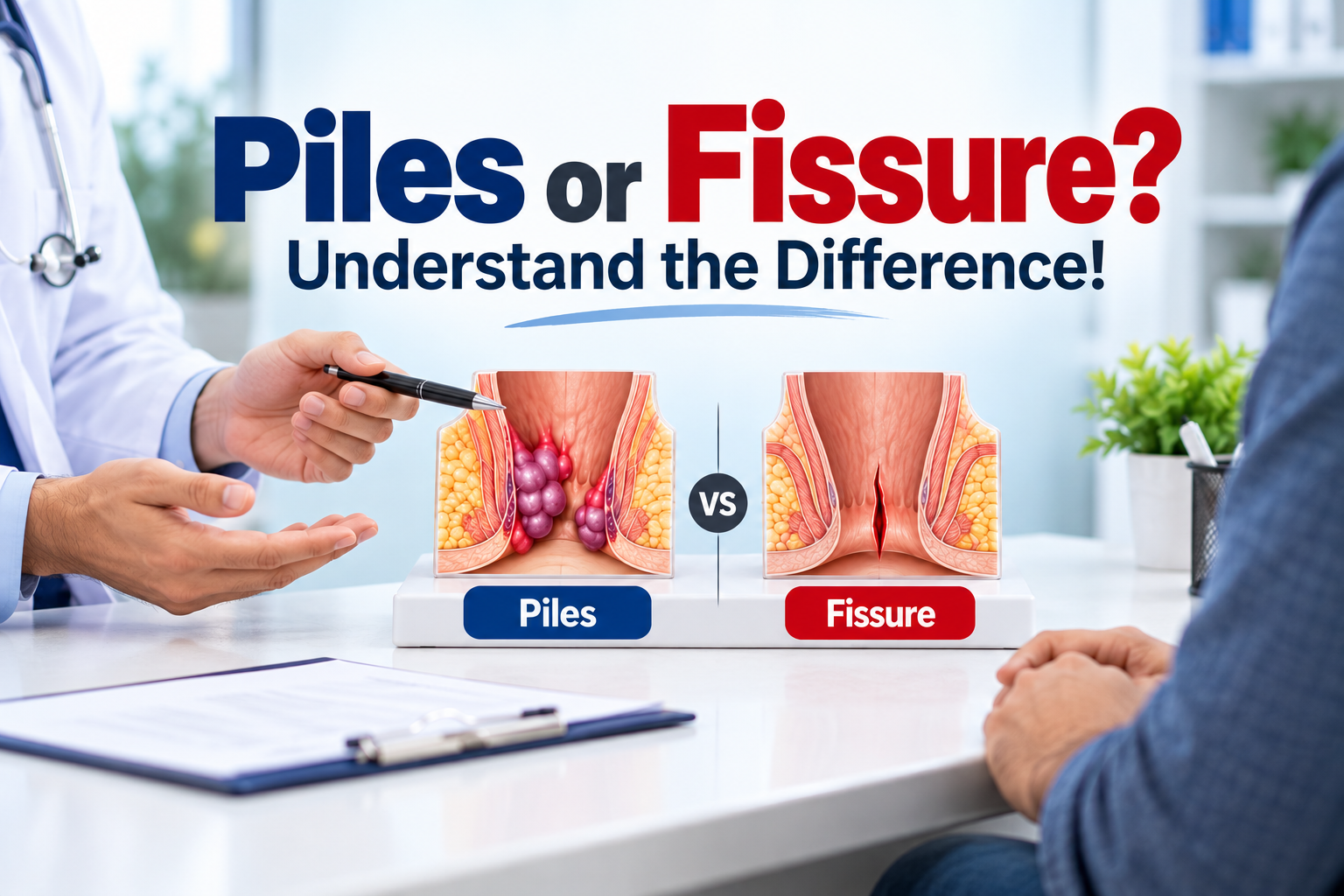
Piles or fissure? This is a common question when a person notices blood after passing stool, pain, burning, itching, or swelling around the anus. Because the symptoms can look similar, many people assume that every anal problem is piles. But piles and anal fissure are two different conditions.

Piles are swollen blood vessels in and around the anus or lower rectum. An anal fissure is a small tear in the lining of the anus. The causes, symptoms, and treatment can therefore be different.

Constipation, hard stools, and straining during bowel movements can play a role in both conditions. A fissure often causes sharp pain during or after passing stool, while piles may cause bleeding, itching, swelling, or a lump. However, symptoms can overlap, so self-diagnosis is not always reliable.

If you are in Beed or nearby areas and have repeated rectal bleeding, anal pain, constipation, or swelling, getting a proper medical examination is important.

Ghodke Piles Hospital in Beed provides consultation and treatment for piles, fissure, fistula, and other anorectal conditions. Treatment is selected according to the patient’s symptoms and examination.


Table of Contents

  1. What Are Piles?
  2. What Is an Anal Fissure?
  3. Piles vs Fissure: Main Difference
  4. Symptoms of Piles
  5. Symptoms of Anal Fissure
  6. Causes and Risk Factors
  7. Can You Have Piles and Fissure Together?
  8. Diagnosis
  9. Treatment Options
  10. Laser Piles Treatment
  11. Stapler Surgery
  12. When Should You See a Doctor?
  13. Prevention Tips
  14. Frequently Asked Questions
  15. Conclusion

What Are Piles?

Piles, also called hemorrhoids, are swollen blood vessels in the anus or lower rectum.

They are common and can affect people of different ages. Some people have piles without any symptoms. Others may experience bleeding, itching, swelling, discomfort, or a lump around the anus.

Piles can be internal or external.

Internal Piles

Internal piles develop inside the rectum. They may cause bright red bleeding during or after bowel movements. In some cases, they can become enlarged and come outside the anus.

External Piles

External piles develop under the skin around the anus. They may cause swelling, tenderness, itching, or pain.

You can read more about the condition on the Piles Treatment page.

Quick Answer: What are piles?

Piles are swollen blood vessels in or around the anus and lower rectum. They can cause bleeding, itching, swelling, discomfort, or a lump.


What Is an Anal Fissure?

An anal fissure is a small tear or crack in the lining of the anus.

It commonly happens when a person passes a hard or dry stool. Constipation and repeated straining can increase the risk.

The most noticeable symptom is often sharp pain while passing stool. The pain may continue for some time after the bowel movement. Fresh blood may also appear on toilet paper or on the surface of the stool.

Some acute fissures can improve with proper bowel management and medical treatment. Long-standing fissures may need additional treatment.

You can learn more about the condition through the Anal Fissure Treatment page.

Quick Answer: What is an anal fissure?

An anal fissure is a small tear in the lining of the anus. It commonly causes sharp pain and fresh bleeding during or after bowel movements.


Piles vs Fissure: What Is the Difference?

The easiest way to understand the difference is:

Piles = swollen blood vessels

Fissure = a tear in the anal lining

FeaturePilesAnal Fissure
Main problemSwollen blood vesselsSmall tear in anal lining
Common symptomBleedingSharp pain
PainMay or may not occurOften prominent
BleedingCommonUsually a small amount of fresh blood
ItchingCan occurLess common
Swelling/lumpCan occurUsually not the main symptom
Common triggerStraining, constipation, pressureHard stool and constipation
TreatmentLifestyle, medicines, procedures or surgery depending on severityBowel management, medicines, procedures or surgery depending on the case

This comparison is useful, but it should not replace a medical examination.

Rectal bleeding can have several causes, so repeated bleeding should not automatically be assumed to be piles.


Symptoms of Piles

Piles can cause different symptoms depending on their type and severity.

Common symptoms include:

  • Bright red bleeding during or after stool
  • Itching around the anus
  • Irritation or burning
  • Swelling
  • A lump around the anus
  • Discomfort while sitting
  • Mucus discharge in some cases
  • Piles coming outside during bowel movements
  • Pain, especially with some external piles

One important point is that internal piles may bleed without causing much pain.

This is one reason why the symptom pattern can be different from an anal fissure.


Symptoms of Anal Fissure

Anal fissure often has a very different pain pattern.

Common symptoms include:

  • Sharp pain while passing stool
  • Burning after bowel movement
  • Pain that continues after passing stool
  • Fresh blood on toilet paper
  • A feeling of tearing or cutting pain
  • Fear of passing stool because of pain
  • Constipation
  • Irritation around the anal opening

A person with fissure may start avoiding bowel movements because of pain. This can make stool harder and may create a cycle of constipation and repeated injury.


What Causes Piles?

Piles are linked with increased pressure around the veins of the anus and rectum.

Common risk factors include:

  • Chronic constipation
  • Straining during bowel movements
  • Sitting on the toilet for a long time
  • Low-fiber diet
  • Chronic diarrhea
  • Pregnancy
  • Being overweight
  • Increasing age
  • Heavy lifting

Regular bowel habits and avoiding unnecessary straining can help reduce the risk.

For reliable information about hemorrhoids, the National Institute of Diabetes and Digestive and Kidney Diseases provides useful patient information.


What Causes an Anal Fissure?

The most common cause is trauma to the anal lining, especially when passing hard stool.

Possible causes include:

  • Constipation
  • Hard or dry stools
  • Repeated straining
  • Frequent diarrhea
  • Childbirth
  • Anal injury
  • Some medical conditions

A fissure may become chronic when it does not heal properly and keeps returning.


Can You Have Piles and Fissure Together?

Yes.

A person can have both piles and an anal fissure at the same time.

This can happen because constipation and straining may contribute to both problems.

For example, a patient may have bleeding from piles and sharp pain from a fissure. Treating only one problem without identifying the other may not provide complete relief.

This is why proper examination is important when symptoms continue.


How Are Piles and Fissure Diagnosed?

Diagnosis usually begins with a discussion about your symptoms and bowel habits.

The doctor may ask:

  • How long have you had the symptoms?
  • Is there bleeding?
  • Is the blood bright red or dark?
  • Is there pain during bowel movements?
  • Does pain continue after stool?
  • Do you have constipation?
  • Is there a lump or swelling?
  • Have you had similar symptoms before?

A physical examination may then be performed.

Depending on the symptoms, additional examination may be required to identify the exact cause.

Do not assume that every case of rectal bleeding is piles. Other conditions can also cause bleeding.


Treatment Options for Piles

Treatment depends on the type and severity of piles.

1. Lifestyle Changes

For mild symptoms, improving bowel habits can be helpful.

Important measures include:

  • Eat more fiber-rich foods
  • Drink adequate fluids
  • Stay physically active
  • Avoid unnecessary straining
  • Do not sit on the toilet for a long time
  • Treat constipation
  • Do not ignore the urge to pass stool

These changes may help improve bowel movements and reduce pressure during defecation.


2. Medicines

Depending on the symptoms, a doctor may recommend medicines for:

  • Pain
  • Itching
  • Swelling
  • Constipation
  • Stool softening

Do not take medicines repeatedly without medical advice, especially if you have persistent bleeding.


3. Procedures

Some internal piles can be treated using procedures such as rubber band ligation or other minimally invasive methods.

The correct option depends on the grade and type of piles.


Laser Piles Treatment in Beed

Laser-based treatment may be considered for selected patients with piles.

Laser treatment is not automatically suitable for every patient. The doctor needs to assess the piles and determine whether the procedure is appropriate.

Ghodke Piles Hospital provides information about Laser Treatment for Piles, Fissure and Fistula in Beed.

The goal of treatment is to manage the underlying condition safely and appropriately. The choice between laser treatment, another procedure, medicines, or surgery depends on the individual case.


Stapler Surgery for Piles

Stapled hemorrhoid surgery may be considered for selected patients with certain types of advanced internal piles.

It is not required for every patient with piles.

The doctor may consider factors such as:

  • Grade of piles
  • Degree of prolapse
  • Bleeding
  • Previous treatment
  • Overall health
  • Examination findings

Therefore, patients should not choose a procedure only because it is described as modern or minimally invasive.


Treatment for Anal Fissure

Treatment of fissure often focuses on helping the tear heal and preventing repeated injury.

Depending on the condition, treatment may include:

  • Increasing dietary fiber
  • Drinking adequate fluids
  • Keeping stools soft
  • Warm sitz baths
  • Medicines prescribed by a doctor
  • Topical treatment
  • Further procedures for persistent or chronic cases

Many acute fissures can improve without surgery when properly managed.

However, a chronic fissure may require more advanced treatment.

You can visit the Anal Fissure Treatment page for more information.


Is Surgery Always Necessary?

No. Surgery is not required for every patient with piles or fissure.

Some people improve with diet changes, better bowel habits, medicines, or non-surgical procedures.

Surgery or another procedure may be considered when:

  • Symptoms are severe
  • The problem keeps returning
  • Conservative treatment does not work
  • Piles are advanced
  • A fissure becomes chronic
  • The doctor finds another condition requiring treatment

The correct treatment should be decided after examination.


When Should You See a Doctor?

Do not ignore the following symptoms:

  • Repeated blood in stool
  • Rectal bleeding
  • Severe anal pain
  • Pain every time you pass stool
  • A painful lump
  • Persistent swelling
  • Pus or unusual discharge
  • Repeated constipation
  • Symptoms that keep returning
  • Symptoms that do not improve with basic care

If you are in Beed or nearby areas, consult a qualified doctor if these symptoms continue.

Early assessment can help identify whether the problem is piles, fissure, fistula, or another anorectal condition.


Prevention Tips for Piles and Fissure

You cannot prevent every case, but healthy bowel habits can reduce the risk.

Follow these simple habits:

  • Eat enough fiber every day.
  • Include fruits and vegetables in your diet.
  • Drink enough water.
  • Stay physically active.
  • Avoid unnecessary straining.
  • Do not spend too much time on the toilet.
  • Do not regularly hold your stool.
  • Manage constipation early.
  • Avoid self-treatment for persistent bleeding.
  • Consult a doctor when symptoms continue.

Frequently Asked Questions

1. What is the difference between piles and fissure?

Piles are swollen blood vessels in or around the anus, while a fissure is a small tear in the anal lining. Piles commonly cause bleeding, itching, swelling, or a lump. Fissure more often causes sharp pain during or after passing stool. However, both conditions can occur together.

2. Which is more painful, piles or fissure?

Anal fissure commonly causes sharp pain during and after bowel movements. Some external or thrombosed piles can also be very painful. Therefore, pain alone cannot always confirm the diagnosis. A doctor may need to examine the area to determine the exact cause.

3. Can piles cause blood in stool?

Yes. Piles can cause bright red bleeding, particularly during or after bowel movements. However, rectal bleeding can have several causes. If bleeding is repeated, heavy, unexplained, or associated with other symptoms, medical evaluation is important rather than assuming that it is simply piles.

4. Can fissure heal naturally?

Some acute anal fissures can heal with proper bowel management, adequate fiber and fluids, warm sitz baths, and treatment recommended by a doctor. Chronic or repeatedly occurring fissures may need additional treatment. Persistent pain or bleeding should be checked by a qualified doctor.

5. Can constipation cause both piles and fissure?

Yes. Chronic constipation can increase pressure on the veins around the anus and contribute to piles. Passing hard stool can also cause a small tear in the anal lining, leading to fissure. Managing constipation is therefore an important part of managing both conditions.

6. Is laser piles treatment available in Beed?

Ghodke Piles Hospital in Beed provides laser treatment options for piles and other anorectal conditions. However, laser treatment is not suitable for every patient. The appropriate treatment depends on the type, grade, symptoms, and examination findings.

7. Can piles and fissure occur together?

Yes. A person can have piles and an anal fissure at the same time. Constipation and repeated straining may contribute to both. If a patient has bleeding as well as severe pain during bowel movements, an examination can help identify whether one or both conditions are present.

8. Does every piles patient need surgery?

No. Treatment depends on the severity of the condition. Some patients improve with dietary changes, medicines, bowel habit changes, or office-based procedures. Surgery may be considered for selected advanced or persistent cases. A doctor should decide the appropriate treatment after examination.

9. Why does fissure hurt after passing stool?

Passing stool can stretch the tear in the anal lining. This can trigger significant pain and muscle spasm in the area, and the discomfort may continue after the bowel movement. Keeping stools soft and following appropriate medical treatment can help support healing.

10. When should I see a piles specialist in Beed?

You should consider consultation if you have repeated bleeding, severe anal pain, a lump, swelling, persistent constipation, recurrent symptoms, or symptoms that do not improve. Proper examination can help determine whether the problem is piles, fissure, fistula, or another condition.


Conclusion

Piles and fissure are not the same condition.

The easiest way to remember the difference is:

Piles = swollen blood vessels

Fissure = a tear in the anal lining

Piles may cause bleeding, itching, swelling, or a lump. Fissure commonly causes sharp pain and burning during or after passing stool.

Constipation and hard stools can contribute to both problems, so maintaining healthy bowel habits is important.

If you have blood in stool, pain while passing stool, anal swelling, or recurring symptoms, do not rely only on self-diagnosis.

Patients in Beed and nearby areas can consult Ghodke Piles Hospital for evaluation and treatment of piles, fissure, fistula, and other anorectal conditions.

Hospital: Ghodke Piles Hospital
Address: Behind Shantai Hotel, Jalna Road, Beed, Maharashtra
Phone: 084593-13196
Website: https://ghodkepileshospital.in/

Medical Disclaimer: This article provides general health information and is not a substitute for a personal medical examination or diagnosis. Treatment should be decided by a qualified doctor based on your individual condition.


Happy-Womens-Day.jpg
08/Mar/2025

Celebrating Women’s Health: A Special Women’s Day Tribute by Ghodke Piles Hospital

March 8th is International Women’s Day, a global celebration of strength, resilience, and empowerment. At Ghodke Piles Hospital, we honor the invaluable contributions of women, especially in healthcare. This Women’s Day, we proudly recognize the dedication and expertise of Dr. Urmila Ghodke, a leading proctologist committed to women’s wellness.

Dr. Urmila Ghodke: A Champion of Women’s Healthcare

Women often hesitate to discuss health issues like piles, fissures, and fistulas, leading to delayed treatment. Dr. Urmila Ghodke has been instrumental in breaking this stigma, providing expert care with compassion. Her patient-centric approach ensures that women receive the best treatment while maintaining comfort and dignity.

Prioritizing Women’s Health: Breaking the Silence on Piles & Digestive Disorders

Many women suffer in silence from conditions like hemorrhoids, constipation, and digestive disorders due to social taboos. At Ghodke Piles Hospital, we are committed to raising awareness and encouraging women to seek timely medical care. Our hospital offers a safe, supportive environment where women can openly discuss their health concerns without hesitation.

Advanced Treatments for Women’s Health

Ghodke Piles Hospital provides cutting-edge solutions for piles and colorectal disorders, including:

  • Laser Treatment for Piles – A painless, quick-recovery procedure for long-term relief.
  • Non-Surgical Options – Sclerotherapy and dietary counseling for effective management.
  • Personalized Care Plans – Tailored solutions focusing on overall well-being and lifestyle improvements.

Take Charge of Your Health This Women’s Day

On this International Women’s Day, prioritize your well-being. Whether you need treatment or just a health check-up, Ghodke Piles Hospital is here to support you. Book your consultation with Dr. Urmila Ghodke today and take a step toward a healthier future!

Happy Women’s Day! 🌸


Read it in Marathi below.

महिलांच्या आरोग्यासाठी समर्पित: घोडके पाइल्स हॉस्पिटलचा महिला दिन विशेष सन्मान

८ मार्च हा आंतरराष्ट्रीय महिला दिन, जो महिलांच्या सामर्थ्य, धैर्य आणि सशक्तीकरणाचा उत्सव आहे. घोडके पाइल्स हॉस्पिटलमध्ये, आम्ही महिलांच्या आरोग्यासाठी समर्पित आहोत. या महिला दिनानिमित्त, आम्ही डॉ. उर्मिला घोडके यांचा सन्मान करतो, ज्या महिलांच्या आरोग्यासाठी उत्कृष्ट सेवा देत आहेत.

डॉ. उर्मिला घोडके: महिलांच्या आरोग्यासाठी एक आदर्श तज्ज्ञ

पाइल्स, फिशर आणि फिस्टुला यांसारख्या समस्या अनेक महिला उघडपणे बोलत नाहीत, त्यामुळे उपचार उशिरा घेतले जातात. डॉ. उर्मिला घोडके यांनी या संकोचाला दूर करत, अत्याधुनिक उपचार आणि मायेने सेवा दिली आहे. त्यांच्या रुग्ण-केंद्रित दृष्टिकोनामुळे महिलांना दर्जेदार उपचार मिळतात.

महिलांच्या आरोग्यास प्राधान्य: पाइल्स आणि पचनाच्या समस्या यांवर उघड चर्चा करूया

बद्धकोष्ठता, पाइल्स आणि पचनाच्या समस्या यांसारख्या त्रासाने अनेक महिला झुंजत असतात, परंतु सामाजिक बंधनांमुळे त्यावर चर्चा करत नाहीत. घोडके पाइल्स हॉस्पिटलमध्ये, आम्ही महिलांना जागरूक करत आहोत आणि त्यांना योग्य उपचार घेण्यास प्रोत्साहित करतो. आमच्या दवाखान्यात महिलांसाठी सुरक्षित आणि विश्वासार्ह वातावरण आहे, जिथे त्या निर्धास्तपणे आरोग्य समस्या सांगू शकतात.

महिलांसाठी अत्याधुनिक उपचार पद्धती

घोडके पाइल्स हॉस्पिटलमध्ये, आम्ही पाइल्स आणि गुदद्वाराच्या विकारांवर आधुनिक उपचार देतो:

  • लेझर उपचार – वेदनारहित आणि जलद पुनर्वसन असलेली पद्धत.
  • बिनसर्जिकल पर्याय – स्क्लेरोथेरपी आणि आहार सल्ला.
  • वैयक्तिक उपचार योजना – आरोग्यासाठी संपूर्ण आणि सुलभ उपाययोजना.

या महिला दिनी स्वतःच्या आरोग्याचा विचार करा

या महिला दिनानिमित्त, आपल्या आरोग्यास प्राधान्य द्या. तुम्हाला उपचार हवे असतील किंवा फक्त तपासणी करायची असेल, घोडके पाइल्स हॉस्पिटल तुमच्या सेवेत आहे. आजच डॉ. उर्मिला घोडके यांच्याकडे अपॉइंटमेंट बुक करा आणि निरोगी भविष्यासाठी पाऊल उचला!

महिला दिनाच्या हार्दिक शुभेच्छा! 🌸


Hemorrhoid-risk-factors-1.jpg
10/Sep/2024

Introduction

Hemorrhoids are a common yet uncomfortable condition that many people experience at some point in their lives. Understanding the factors that increase the risk of developing hemorrhoids is crucial for prevention and management. This article explores the various risk factors associated with hemorrhoids, including pregnancy, age, obesity, and heredity, and provides practical advice for reducing these risks. For professional treatment, consider visiting Ghodke Piles Hospital in Beed.

What Are Hemorrhoids?

Hemorrhoids, also known as piles, are swollen veins in the lower rectum and anus. They can be internal, located inside the rectum, or external, under the skin around the anus. Common symptoms include pain, itching, and rectal bleeding, which can range from mild discomfort to severe pain. While hemorrhoids are generally not life-threatening, they can cause significant discomfort and inconvenience.

Suffering from piles? Discover the most advanced laser treatment in Beed – Book your consultation at Ghodke Piles Hospital today!

Common Risk Factors for Hemorrhoids

Several factors contribute to the development of hemorrhoids. These include pregnancy, age, obesity, heredity, chronic constipation or diarrhea, a sedentary lifestyle, and poor dietary habits. Understanding these risk factors can help in taking preventive measures to avoid or manage hemorrhoids effectively.

Pregnancy and Hemorrhoids

Pregnancy is a major risk factor for hemorrhoids. As the uterus expands, it puts pressure on the pelvic veins and the inferior vena cava, which can slow down the return of blood from the lower body, increasing pressure on the veins below the uterus and leading to hemorrhoids. Hormonal changes during pregnancy can also contribute to the development of hemorrhoids by relaxing the veins and causing them to swell. Learn more >>

How Pregnancy Increases the Risk

The growing uterus exerts pressure on the veins in the rectal area, causing them to enlarge and swell. Additionally, constipation, which is common during pregnancy due to hormonal changes, can lead to straining during bowel movements, further increasing the risk of hemorrhoids.

Tips to Manage and Prevent Hemorrhoids During Pregnancy

  • Maintain a high-fiber diet: Eating plenty of fruits, vegetables, and whole grains can help prevent constipation.
  • Stay hydrated: Drinking plenty of water keeps stools soft and easier to pass.
  • Exercise regularly: Physical activity can help prevent constipation and reduce the pressure on the veins.
  • Avoid prolonged sitting or standing: Changing positions frequently can reduce the pressure on the rectal veins.
Don’t let hemorrhoids control your life – Get expert care from Beed’s trusted piles specialist now!

Age-Related Risk: Being Above 50 Years

As people age, the tissues that support the veins in the rectum and anus can weaken and stretch, making them more susceptible to becoming swollen and forming hemorrhoids. Those above 50 are particularly at risk, as the natural aging process makes the veins more vulnerable.

Why Age is a Significant Risk Factor

Aging leads to a loss of muscle tone and elasticity in the rectal area, which can result in the veins becoming more prone to swelling. Additionally, as people age, they may become more sedentary, which can contribute to constipation and increased pressure on the rectal veins.

Preventative Measures for Older Adults

  • Regular exercise: Staying active can help maintain muscle tone and promote healthy bowel movements.
  • Dietary adjustments: Incorporating more fiber into the diet can help prevent constipation.
  • Routine health checks: Regular medical check-ups can help detect and manage any emerging health issues, including hemorrhoids.
Looking for permanent relief from piles? Visit Ghodke Hospital for painless, non-surgical treatment options that work!

Obesity and Hemorrhoids

Carrying excess weight, especially in the abdominal area, can increase the pressure on the pelvic veins and the lower rectum, leading to hemorrhoids. Obesity is a significant risk factor due to the added pressure on the veins and the likelihood of related conditions such as constipation.

The Link Between Excess Weight and Hemorrhoids

Obesity leads to increased abdominal pressure, which affects blood flow and can cause the veins in the rectum to swell. This is exacerbated by the fact that obese individuals may have a diet low in fiber and high in processed foods, leading to constipation.

Strategies to Reduce the Risk

  • Weight management: Losing weight through a balanced diet and regular exercise can significantly reduce the risk of hemorrhoids.
  • High-fiber diet: Including fiber-rich foods helps prevent constipation and reduce strain during bowel movements.
  • Regular physical activity: Exercise not only helps with weight loss but also promotes regular bowel movements.
Say goodbye to pain, itching, and bleeding – Explore the best piles treatment in Beed at Ghodke Piles Hospital!

Heredity: Family History of Hemorrhoids

Genetics can play a role in the development of hemorrhoids. If you have a family history of hemorrhoids, you may be more likely to develop them yourself. This genetic predisposition can affect the strength of the vein walls and the ability to manage venous pressure effectively.

Genetic Predisposition to Hemorrhoids

If your parents or other close relatives have had hemorrhoids, you may inherit a tendency for weak vein walls or other factors that increase your risk.

How to Manage Inherited Risk

  • Be proactive with prevention: Adopt a healthy lifestyle that includes a high-fiber diet, regular exercise, and proper hydration.
  • Regular check-ups: Early detection can help manage symptoms and prevent the condition from worsening.
Beed’s #1 Choice for Hemorrhoid Treatment – Call Ghodke Hospital now and feel the relief you deserve!

Additional Contributing Factors

In addition to the primary risk factors discussed, other elements can contribute to the development of hemorrhoids:

  • Chronic constipation or diarrhea: Both conditions can lead to straining during bowel movements, increasing the risk of hemorrhoids.
  • Sedentary lifestyle: Lack of physical activity can contribute to constipation and increased pressure on the rectal veins.
  • Poor diet: Diets low in fiber and high in processed foods can lead to constipation, which is a major cause of hemorrhoids.
Need fast, effective piles relief? Schedule your appointment with the best piles doctor in Beed today!

How to Prevent Hemorrhoids

Preventing hemorrhoids involves making lifestyle changes that promote healthy bowel habits and reduce strain on the rectal veins.

Diet and Lifestyle Changes

  • Increase fiber intake: Aim for at least 25-30 grams of fiber daily from fruits, vegetables, and whole grains.
  • Stay hydrated: Drink plenty of water throughout the day.
  • Exercise regularly: Engage in physical activity to promote regular bowel movements and reduce pressure on the veins.

Proper Bowel Habits

  • Avoid straining: Take your time during bowel movements and avoid straining.
  • Don’t delay: Respond promptly to the urge to have a bowel movement to prevent hard stools.
  • Use the restroom regularly: Establish a routine for bowel movements to help maintain regularity.

Home Remedies for Hemorrhoid Relief

If you’re already dealing with hemorrhoids, several home remedies can help relieve discomfort and promote healing.

Warm Baths and Sitz Baths

Soaking in a warm bath or sitz bath for 15-20 minutes several times a day can help reduce swelling and alleviate discomfort.

Over-the-Counter Treatments

Creams, ointments, and suppositories available over-the-counter can help soothe symptoms such as pain and itching.

Dietary Changes

Increasing your fiber intake and staying hydrated can help soften stools and reduce straining during bowel movements.

When to See a Doctor

While hemorrhoids can often be managed at home, certain symptoms may require medical attention.

Symptoms That Require Medical Attention

  • Excessive bleeding: If you notice significant bleeding during bowel movements.
  • Severe pain: If the pain becomes intense and unmanageable with home remedies.
  • Prolapse: If the hemorrhoids protrude from the anus and cannot be pushed back in.

Possible Complications if Untreated

Untreated hemorrhoids can lead to complications such as anemia (from chronic blood loss), thrombosed hemorrhoids, or severe pain. If you’re facing any of these issues, it’s advisable to consult a specialist at Ghodke Piles Hospital in Beed.

Treatment Options for Hemorrhoids

If home remedies aren’t effective, medical treatments may be necessary. Ghodke Piles Hospital offers a range of advanced treatment options to ensure effective relief.

Non-Surgical Treatments

  • Rubber band ligation: A rubber band is placed around the base of the hemorrhoid to cut off blood supply, causing it to wither and fall off.
  • Sclerotherapy: A chemical solution is injected into the hemorrhoid, causing it to shrink.
  • Infrared coagulation: A device uses infrared light to shrink hemorrhoids.

Surgical and Advanced Interventions

  • Hemorrhoidectomy: The surgical removal of hemorrhoids.
  • Stapled hemorrhoidopexy: A procedure that cuts off blood flow to the hemorrhoid tissue.
  • Laser Treatment: A modern, minimally invasive procedure that uses laser energy to shrink hemorrhoids with precision and minimal discomfort. This option is highly effective and offers a quicker recovery time.

To learn more about laser treatment for piles, visit Ghodke Piles Hospital and consult with their experienced specialists.

Myths and Facts About Hemorrhoids

There are many misconceptions about hemorrhoids that can lead to confusion and improper treatment.

Common Misconceptions

  • Myth: Only older people get hemorrhoids.
    Fact: Hemorrhoids can occur at any age, though they are more common in older adults.
  • Myth: Spicy foods cause hemorrhoids.
    Fact: While spicy foods can irritate hemorrhoids, they don’t cause them.
  • Myth: Sitting on cold surfaces causes hemorrhoids.
    Fact: There’s no evidence to suggest that cold surfaces lead to hemorrhoids; it’s prolonged sitting, regardless of temperature, that can contribute to their development.

Debunking Myths with Facts

Understanding the true causes and treatments of hemorrhoids can help manage the condition more effectively. For reliable information and advanced treatments, consider consulting the specialists at Ghodke Piles Hospital.

Living with Hemorrhoids

If you have hemorrhoids, managing the condition involves making long-term lifestyle adjustments.

Managing Symptoms

  • Regular exercise: Helps maintain healthy bowel movements and reduce pressure on the veins.
  • Healthy diet: A diet rich in fiber and hydration can prevent constipation.
  • Proper hygiene: Keeping the anal area clean and dry can prevent irritation.

Long-Term Care and Lifestyle Adjustments

Incorporating healthy habits into your daily routine can help prevent the recurrence of hemorrhoids. Regular check-ups at Ghodke Piles Hospital can also help manage your condition and prevent complications.

Conclusion

Hemorrhoids are a common condition that can be managed and prevented by understanding the various risk factors. By adopting a healthy lifestyle, including a balanced diet, regular exercise, and proper hydration, you can reduce your risk and manage symptoms effectively. Whether you are pregnant, over 50, obese, or have a family history of hemorrhoids, taking proactive steps can help maintain your health and comfort.

If you’re dealing with persistent hemorrhoids, advanced treatment options, including laser therapy, are available at Ghodke Piles Hospital. Their team of specialists is dedicated to providing effective and compassionate care.

FAQs

1. What are the early signs of hemorrhoids?
Early signs include itching, discomfort, and minor bleeding during bowel movements.

2. Can hemorrhoids go away on their own?
In some cases, hemorrhoids can resolve on their own, especially with proper care and lifestyle changes.

3. Is surgery the only option for severe hemorrhoids?
No, there are non-surgical treatments available, but surgery may be recommended for severe or persistent cases. Laser treatment is also a minimally invasive option available at Ghodke Piles Hospital.

4. Are there foods that can help prevent hemorrhoids?
Yes, high-fiber foods such as fruits, vegetables, and whole grains can help prevent constipation and reduce the risk of hemorrhoids.

5. How do I know if I have hemorrhoids or something else?
If you experience symptoms like bleeding, pain, or itching, consult a healthcare provider for a proper diagnosis. You can also visit Ghodke Piles Hospital for a thorough evaluation.


Say Goodbye to Hemorrhoids with Ghodke Piles Hospital!

Tired of dealing with the pain and discomfort of hemorrhoids? It’s time to take control and get your life back! At Ghodke Piles Hospital, we offer cutting-edge, minimally invasive laser treatments that provide fast, effective relief.

Why Choose Ghodke Piles Hospital?

  • Expert Specialists: Our highly trained doctors offer personalized care tailored to your needs.
  • Advanced Technology: We utilize the latest laser technology for safe, quick, and virtually painless treatment.
  • Patient-Centered Care: We’re committed to making your experience as comfortable and stress-free as possible.

Don’t Suffer in Silence—Act Now!
Visit Us: Ghodke Hospital, Behind Shantai Hotel, Jalna Road, Beed, Maharashtra – 431122
Call Us Today: 084593-13196 / 02442-222220

Learn More: ghodkepileshospital.in

From diagnosis to cure – Trust Ghodke Hospital for complete piles and digestion care under one roof!

piles-doctors-in-beed-maharashtra-1200x557.jpg
07/Nov/2023

Piles Doctor in Beed

Piles doctors in Beed, Maharashtra: Are you looking for the best piles doctors in Beed, Maharashtra, who can provide expert care and a compassionate approach to your condition? Look no further! Ghodke Piles Hospital is your trusted destination for comprehensive piles treatment. Led by renowned physicians, Dr. Ramesh Ghodke and Dr. Urmila Ghodke, including a dedicated female piles doctor, they offer a wide range of old and new treatment options to ensure you receive the best care available.

Piles, also known as hemorrhoids, can be a painful and distressing condition. In this article, we will delve into the symptoms, causes, and the innovative treatment options provided by Ghodke Piles Hospital to help you understand and manage your condition effectively.

Piles: Understanding the Condition

Piles, or hemorrhoids, are swollen blood vessels in the rectal and anal area. This condition can lead to discomfort, pain, bleeding, and itching. Knowing the symptoms and causes is crucial to seek timely treatment.

Symptoms of Piles:

  1. Rectal Bleeding: One of the most common symptoms of piles is the presence of bright red blood on the toilet paper or in the toilet bowl after a bowel movement.
  2. Itching and Discomfort: Piles can cause itching and discomfort in the anal region, making it challenging to sit comfortably.
  3. Pain: Some individuals experience pain during bowel movements or when sitting for extended periods.
  4. Swelling: Piles can lead to swelling around the anus, which may be sensitive or painful to the touch.

Causes of Piles:

The exact cause of piles is often a combination of factors, including:

  1. Straining During Bowel Movements: Exerting excessive pressure while passing stool can lead to the development of piles.
  2. Chronic Constipation or Diarrhea: Irregular bowel habits can contribute to the formation of piles.
  3. A Sedentary Lifestyle: Lack of physical activity can increase the risk of piles.
  4. Obesity: Being overweight can put additional pressure on the rectal area, leading to piles.

Old and New Treatment Options for Piles:

At Ghodke Piles Hospital, you can access a range of traditional and modern treatments to address your piles effectively. Dr. Ramesh Ghodke and Dr. Urmila Ghodke, along with their dedicated team, will customize a treatment plan that suits your specific needs. Some of the treatments offered include:

  1. Medication: Mild cases of piles can often be managed with medication and lifestyle modifications.
  2. Sclerotherapy: A minimally invasive procedure that involves injecting a solution into the piles to shrink them.
  3. Rubber Band Ligation: This procedure involves placing a rubber band around the base of the piles to cut off the blood supply, causing them to shrink and fall off.
  4. Laser Treatment: A cutting-edge approach that uses laser energy to remove or shrink piles, reducing discomfort and recovery time.
  5. Surgery: In severe cases, surgical intervention may be necessary. Ghodke Piles Hospital provides state-of-the-art surgical procedures to effectively treat piles.

Contact Information:

If you’re looking for the best piles doctors in Beed, don’t hesitate to reach out to Ghodke Piles Hospital:

Whether you require the expertise of a female piles doctor or a male specialist, Ghodke Piles Hospital has you covered. Your path to relief and recovery starts here.

Conclusion:

Ghodke Piles Hospital in Beed, Maharashtra, is your trusted destination for the best piles doctors and cutting-edge treatment options. Don’t let piles disrupt your life; contact them today to schedule a consultation and take the first step towards a pain-free, comfortable future. Your well-being is their priority, and they are here to provide you with the expert care you deserve.


piles-in-females-1200x812.jpg
19/Oct/2023

Are you seeking relief from the discomfort and pain of piles, and do you prefer the compassionate care of a female doctor? Look no further than Ghodke Piles Hospital in Beed, Maharashtra, where Dr. Urmila Ghodke, our expert female piles specialist, is dedicated to helping women regain their comfort and well-being.

Understanding Piles – Symptoms and Causes

Piles, or hemorrhoids, can be a distressing condition, especially for women. Common symptoms include:

  • Rectal Bleeding: The sight of blood in your stool or on toilet paper can be distressing and is often one of the first signs of piles.
  • Itching and Discomfort: Persistent itching and discomfort in the anal area can significantly impact your daily life.
  • Swelling and Pain: Piles can lead to swelling, pain, and a feeling of heaviness in the rectal area.
  • Prolapse: In severe cases, piles may protrude outside the anus, causing immense discomfort.

The exact cause of piles varies, but it’s often linked to factors like straining during bowel movements, chronic constipation or diarrhea, and a lack of dietary fiber.

Why Female Piles Patients Prefer Lady Doctors

Understanding the unique needs of female piles patients is crucial. Women often prefer female doctors for several reasons:

  1. Comfort and Empathy: Women tend to feel more comfortable discussing intimate health issues with female doctors, like piles, due to the shared understanding of female anatomy and experiences.
  2. Cultural Sensitivity: For many women, cultural or religious factors may make it more appropriate to consult with a female doctor for such conditions.
  3. Privacy and Dignity: A female doctor can provide a more comfortable and dignified examination and treatment experience.

Piles During Pregnancy – Expert Care for Expectant Mothers

Pregnancy is a beautiful journey, but it can also bring about health challenges, including piles. During pregnancy, women are more prone to piles due to hormonal changes and increased pressure on blood vessels in the pelvic area. Dr. Urmila Ghodke, our expert female piles specialist, understands the unique concerns of expectant mothers.

We offer specialized care for pregnant women with piles, focusing on:

  • Pain Management: Pregnancy can be uncomfortable on its own, and piles can exacerbate the discomfort. We provide safe and effective pain management strategies to help you through this delicate phase.
  • Minimally Invasive Treatment: If intervention is necessary, our minimally invasive procedures ensure minimal risk to both you and your baby.
  • Postpartum Care: Our support extends beyond pregnancy. We provide postpartum care to ensure your full recovery and well-being.

Affordable Care – Your Well-being is Our Priority

We understand the financial concerns that come with pregnancy and medical expenses. At Ghodke Piles Hospital, we believe that quality healthcare should be accessible to all women, including expectant mothers. We offer affordable treatment options without compromising the quality of care you receive.

Why Choose Ghodke Piles Hospital

  • Compassionate Care: We understand the unique needs of women, whether they are seeking treatment for piles or are pregnant. Dr. Urmila Ghodke and her team offer compassionate care tailored to your specific situation.
  • Expertise and Experience: With years of experience in proctology, Dr. Urmila Ghodke is a trusted name in the field. She’s committed to providing women with the best care.
  • Modern Facilities: Ghodke Piles Hospital is equipped with state-of-the-art facilities, ensuring that you receive the most advanced treatments available.
  • Affordable Treatment: We believe that every woman should have access to quality healthcare. Our cost-effective solutions ensure you get the care you deserve.
  • Convenient Location: Located in Beed, Maharashtra, our hospital is easily accessible, ensuring you receive prompt care when you need it the most.

Contact Us Today

Don’t let piles disrupt your life, especially during pregnancy. Reach out to us at Ghodke Piles Hospital to schedule an appointment with Dr. Urmila Ghodke, your trusted female piles specialist in Beed, Maharashtra. Call us at 84593-13196 or 02442-222220 or visit our website to book your consultation.


Visit us on social networks:


Visit us on social networks:


Ghodke Piles Hospital

New Address: Ghodke Hospital, Behind shantai Hotel, Jalna Road , Beed, Maharashtra – 431122

084593-13196


Call us now if you are in a medical emergency need, we will reply swiftly and provide you with a medical aid.


Piles hospital in beed, maharashtra

Copyright Ghodke Hospital 2025. All rights reserved.

Call Now