
Fistula Treatment in Beed | Symptoms, Causes & Surgery
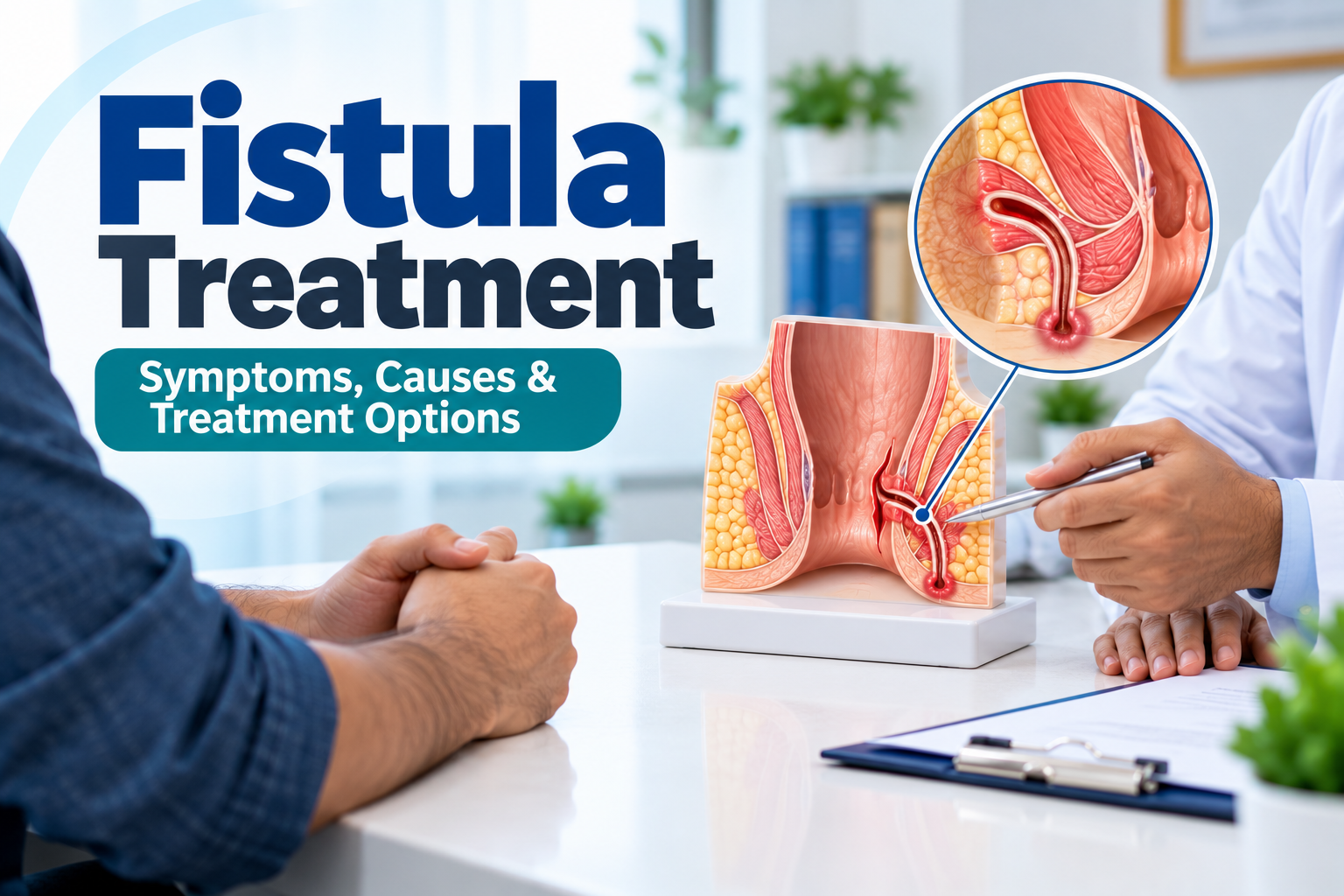
Fistula Treatment in Beed: Symptoms, Causes, Surgery and Recovery
Introduction
If you are experiencing these symptoms, seeking timely fistula treatment in Beed is crucial for proper medical attention.
Are you experiencing repeated swelling, pain, or pus discharge near the anus? These symptoms may be signs of an anal fistula, a condition that needs proper medical attention.
An anal fistula is a small, abnormal tunnel that forms between the inside of the anal canal and the skin near the anus. It often develops after an infection or an abscess (a painful collection of pus) in the anal area.
Many people confuse fistula with piles or fissure because these conditions affect the same part of the body. However, their causes and treatments are different.
A fistula may cause repeated infections, pain while sitting, swelling, or discharge that stains underwear. Sometimes, the swelling improves for a few days and then returns. This can happen when the infection drains but the fistula tunnel remains.
If you live in Beed or nearby areas and notice these symptoms, a medical examination can help identify the problem.
At Ghodke Piles Hospital, Beed, patients can seek evaluation for anal fistula, piles, fissure, and other anorectal conditions. Treatment depends on the location and complexity of the fistula, the patient’s health, and the doctor’s examination.
Table of Contents
What Is an Anal Fistula?
Symptoms of Anal Fistula
Causes and Risk Factors
Types of Anal Fistula
Fistula vs Piles vs Fissure
How Is Fistula Diagnosed?
Fistula Treatment Options
Laser Fistula Treatment
Is Surgery Necessary?
Recovery After Fistula Surgery
When to Consult a Doctor
Prevention Tips
Frequently Asked Questions
Conclusion
What Is an Anal Fistula?
An anal fistula is an abnormal tunnel connecting the anal canal to the skin around the anus. It commonly forms after an infection in a small gland inside the anus. The infection may produce an abscess, and a fistula can develop after the abscess drains.
The tunnel may continue to release pus or fluid, even when the original swelling has reduced.
Unlike a small anal fissure, a fistula usually does not heal permanently without a medical procedure.
A fistula can be simple or complex, depending on its path and relationship with the muscles that control bowel movements.
For information about the condition and available services, visit the Anal Fistula Treatment page.
Symptoms of Anal Fistula
The symptoms can vary depending on the location of the fistula and whether an active infection is present.
Common signs include:
Pus discharge near the anus: Yellowish or whitish fluid may come from a small opening in the skin.
Repeated swelling: A painful lump may develop, improve, and return.
Pain around the anus: Pain may increase while sitting, walking, or passing stool.
Skin irritation: Repeated discharge may cause itching, redness, or soreness.
Blood-stained discharge: Small amounts of blood may sometimes appear.
Unpleasant smell: Persistent drainage can produce an unpleasant odor.
Fever: Fever or chills may occur when an active infection or abscess develops.
Some people have very little pain between episodes. However, a lack of severe pain does not necessarily mean the fistula has healed.
What Causes an Anal Fistula?
The most common cause is an infection in a small gland inside the anal canal.
The process usually happens in stages:
A gland becomes infected.
Pus collects and forms an anal abscess.
The abscess drains naturally or is treated by a doctor.
A small tunnel may remain between the anal canal and the skin.
The tunnel may continue to cause discharge or repeated infections.
Other possible causes
Although less common, anal fistulas can also be associated with Crohn’s disease, certain infections, previous surgery, trauma, or radiation treatment.
An anal fistula is not simply caused by poor hygiene or constipation. Its most common cause is an infection involving the anal glands.
Risk Factors for Anal Fistula
Certain medical conditions and circumstances may increase the risk of developing an anal fistula.
These include a previous anal abscess, Crohn’s disease, a history of anal fistula, and conditions that affect the body’s ability to fight infections.
Diabetes can make some infections more difficult to manage, although it is not the usual direct cause of an anal fistula.
People who have had repeated painful swelling or pus discharge near the anus should consider medical evaluation rather than repeatedly treating the symptoms at home.
Types of Anal Fistula
Doctors classify anal fistulas according to the path of the tunnel and its relationship with the anal sphincter muscles. These muscles help control bowel movements.
| Type | Simple explanation |
|---|---|
| Intersphincteric fistula | Passes between the two main anal sphincter muscles |
| Transsphincteric fistula | Passes through part of the sphincter muscles |
| Suprasphincteric fistula | Travels upward and around part of the sphincter system |
| Extrasphincteric fistula | Passes from the rectum to the skin through a less common route |
A fistula may also be described as simple or complex.
Complex fistulas may have branches, involve more muscle, recur after treatment, or be associated with conditions such as Crohn’s disease.
Identifying the type is important because the treatment must aim to close the fistula while protecting bowel control.
Fistula vs Piles vs Fissure: What Is the Difference?
People often confuse these three conditions because they can all cause discomfort around the anus.
| Condition | What happens? | Common symptoms |
|---|---|---|
| Piles | Blood vessels become swollen | Bleeding, itching, swelling or a lump |
| Anal fissure | A small tear develops in the anal lining | Sharp pain during stool, fresh bleeding |
| Anal fistula | An abnormal tunnel develops, often after an infection | Pus discharge, repeated swelling, pain |
The key difference is that pus discharge and repeated infection are more typical of an anal fistula.
However, other conditions can produce similar symptoms. A qualified doctor must confirm the diagnosis.
Patients can also learn about related conditions through the hospital’s Piles Treatment and Anal Fissure Treatment pages.
How Is an Anal Fistula Diagnosed?
Diagnosis begins with a discussion about symptoms and medical history.
A doctor may ask whether you have experienced repeated swelling, discharge, fever, previous abscesses, or surgery near the anus.
Physical examination
The doctor may examine the skin around the anus to look for a small opening, swelling, scars, or discharge.
A gentle internal examination may be performed when appropriate.
MRI scan
An MRI scan may be recommended when the fistula is complex, recurrent, or difficult to identify through examination alone.
MRI can help show the fistula’s path, branches, and relationship with nearby muscles.
Examination under anesthesia
In some cases, the surgeon may recommend an examination while the patient is under anesthesia. This allows a more detailed assessment and may be combined with treatment.
Not every patient needs all these tests. The examination plan depends on the individual condition.
Fistula Treatment Options
Anal fistulas usually require a procedure because the abnormal tunnel rarely closes permanently on its own. The main goal is to treat the fistula while protecting the muscles responsible for bowel control.
1. Medicines and antibiotics
Medicines can help control pain and certain infections, but they do not normally close an established fistula.
Antibiotics may be needed when infection spreads into nearby skin, when there are general signs of infection, or when the patient’s immune system is weakened.
If an abscess is present, it usually needs drainage rather than antibiotics alone.
2. Fistulotomy
Fistulotomy is a common operation for simple anal fistulas.
The surgeon opens the fistula tunnel so it can heal gradually from the inside outward.
This treatment is generally considered when the fistula passes through little or none of the anal sphincter muscle.
3. Seton treatment
A seton is a surgical thread or similar material placed through the fistula tunnel.
It helps maintain drainage and control infection. In some cases, a seton is used before another operation.
A loose draining seton does not usually cure the fistula by itself.
4. LIFT procedure
LIFT stands for Ligation of the Intersphincteric Fistula Tract.
In simple terms, the surgeon closes and divides the fistula tunnel between the anal muscles.
This procedure may be considered when cutting through the muscles could increase the risk of bowel-control problems.
5. Advancement flap surgery
In this procedure, the surgeon uses healthy tissue from inside the rectum to cover the internal fistula opening.
It may be suitable for selected complex fistulas when protecting the anal muscles is especially important.
These procedures have different benefits and risks. The choice depends on fistula anatomy, previous treatment, and individual health.
NHS+2
Laser Fistula Treatment in Beed
Laser fistula treatment is one of the procedures available for selected patients.
During laser fistula closure, a thin laser fiber is placed inside the fistula tunnel. Laser energy is used to treat the tunnel and encourage its closure.
Is laser fistula treatment better than traditional surgery?
Not necessarily.
Laser treatment aims to avoid cutting the anal sphincter muscles, but its long-term results are less certain than those of some established operations.
A fistula may return after laser treatment, just as recurrence can occur after other procedures.
The right choice depends on the fistula’s size, path, branches, previous treatment, and relationship with the anal muscles.
Ghodke Piles Hospital lists laser treatment, seton techniques, and fistulotomy among its fistula services. Patients can read more on the hospital’s Anal Fistula Treatment page.
Ghodke Piles Hospital in Beed, Maharashtra+1
Is Surgery Necessary for Anal Fistula?
Surgery or another medical procedure is necessary in most cases because an established anal fistula rarely heals naturally.
Warm baths, good hygiene, and medicines may help reduce discomfort, but they usually cannot remove the abnormal tunnel.
Some people notice that pus discharge stops temporarily. This does not always mean the fistula has healed. The opening may close for a short time while infection remains inside.
If a painful abscess forms, it may require urgent drainage.
Recovery After Fistula Surgery
Recovery depends on the type of fistula, the procedure performed, and the patient’s general health.
Some patients return home on the day of surgery. Others may need hospital observation or staged treatment.
During recovery
The doctor may recommend:
Keeping the wound clean as instructed
Taking prescribed medicines
Using warm sitz baths if advised
Eating fiber-rich food
Drinking adequate fluids
Avoiding straining during bowel movements
Attending follow-up appointments
Watching for fever, increasing swelling, or unusual bleeding
Some discomfort and wound discharge can occur during healing.
The time needed for complete recovery varies. A simple procedure may allow an earlier return to normal activities, while a complex fistula may require several weeks or longer to heal.
Patients should follow their surgeon’s individual instructions rather than assuming that every fistula operation has the same recovery period.
Can Anal Fistula Come Back After Treatment?
Yes. An anal fistula can recur even after surgery.
The risk depends on factors such as the fistula’s complexity, branching tunnels, underlying Crohn’s disease, previous operations, and the treatment performed.
Repeated discharge or swelling after treatment should be assessed by a doctor.
A successful treatment plan should address both the fistula tunnel and any underlying cause where possible.
When Should You Consult a Doctor?
Seek medical advice if you experience repeated pus discharge, pain, swelling, or a small opening near the anus.
You should also arrange an examination if a previously treated abscess keeps returning.
Seek urgent medical care if you develop fever, chills, rapidly increasing pain or swelling, spreading redness, or feel seriously unwell. These may indicate an active infection requiring prompt treatment.
For patients looking for fistula treatment in Beed, a qualified doctor can assess the condition and explain suitable treatment options.
Can Anal Fistula Be Prevented?
Not every anal fistula can be prevented because many develop after an infection in an anal gland.
However, a few habits can support general anal and bowel health:
Seek treatment for painful anal swelling or suspected abscesses.
Follow medical advice after abscess drainage.
Maintain gentle personal hygiene.
Manage long-term bowel conditions with medical guidance.
Keep diabetes well managed if applicable.
Avoid squeezing or attempting to drain a painful anal lump yourself.
Attend follow-up appointments after treatment.
Remember that a fistula is not necessarily caused by poor hygiene. Good hygiene alone cannot prevent every case.
Frequently Asked Questions About Fistula Treatment
1. What is the best treatment for anal fistula?
There is no single treatment that is best for every anal fistula. Simple fistulas may be treated with fistulotomy, while complex fistulas may need seton treatment, LIFT, advancement flap surgery, or another procedure. The surgeon selects treatment according to the fistula’s path, muscle involvement, and individual health.
2. Can an anal fistula heal without surgery?
An established anal fistula rarely heals permanently without a medical procedure. Medicines and warm baths may reduce discomfort, but they usually do not close the abnormal tunnel. A doctor can confirm the diagnosis and explain whether surgery or another treatment is needed.
3. Is laser fistula surgery available in Beed?
Ghodke Piles Hospital in Beed lists laser treatment among its anal fistula services. However, laser treatment is not appropriate for every fistula. A medical examination, and sometimes imaging, is needed to decide which procedure is suitable.
4. Is fistula surgery painful?
Fistula surgery is performed with appropriate anesthesia, so pain is controlled during the procedure. Some pain or discomfort may occur afterward. The amount varies according to the operation and individual recovery. Doctors may recommend pain medicines, wound care, and other measures to manage discomfort.
5. How long does it take to recover from fistula surgery?
Recovery time depends on the procedure and the complexity of the fistula. Some people return to light activities relatively soon, but complete wound healing may take several weeks or longer. Patients with complex fistulas or staged procedures may need more time and follow-up care.
6. What is the difference between piles and fistula?
Piles are swollen blood vessels in or around the anus. An anal fistula is an abnormal tunnel connecting the anal canal to nearby skin, usually after an infection. Piles commonly cause bleeding or swelling, while fistulas often cause repeated pus discharge, pain, and infection.
7. Can antibiotics cure an anal fistula?
Antibiotics may help treat certain infections associated with an anal fistula, but they usually cannot close the fistula tunnel. An abscess may also need drainage. Treatment depends on the cause, severity, and examination findings. Do not repeatedly take antibiotics without medical advice.
8. Can fistula return after surgery?
Yes. Anal fistulas can recur after treatment, especially when the fistula is complex, has several branches, or is associated with an underlying medical condition. Follow-up care helps monitor healing. If discharge, swelling, or pain returns, the patient should seek another examination.
9. Is fistula a serious condition?
An anal fistula is usually not life-threatening, but it can cause repeated infections, pain, and discharge. An untreated abscess may become more serious, especially if infection spreads. Fever, increasing swelling, or severe pain requires prompt medical attention. Proper diagnosis helps guide treatment.
10. Where can I get fistula treatment in Beed?
Ghodke Piles Hospital is located on Jalna Road in Beed, Maharashtra. Its website lists anal fistula evaluation and treatment services, including fistulotomy, seton techniques, and laser treatment. Patients can contact the hospital to learn about consultation arrangements and discuss available treatment options.
For effective and reliable fistula treatment in Beed consulting a specialist is essential.
Conclusion
Anal fistula is a condition that can cause repeated pain, swelling, and pus discharge near the anus. Although symptoms may temporarily improve, the underlying fistula tunnel often remains.
Most anal fistulas need a medical procedure for lasting treatment. The appropriate option depends on the fistula’s location, complexity, and involvement of the anal muscles.
If you are experiencing repeated anal infections or discharge, a qualified doctor can help identify the cause and discuss treatment.
For effective and reliable fistula treatment in Beed consulting a specialist is essential.
Ghodke Piles Hospital, Beed
084593-13196